Carpet Moths: How to Spot Them and Treat Them
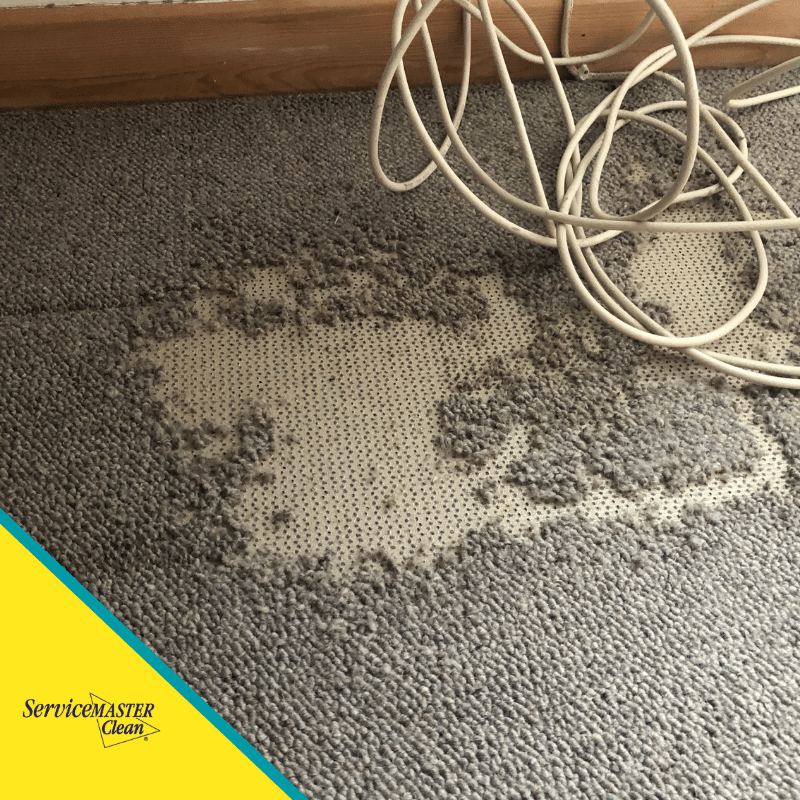
Carpet moths may be small, but the damage they cause can be significant. From a few missing tufts in a room’s corner to several square metres of damaged carpet, an untreated infestation can quickly become costly.
ServiceMaster Clean has understood this problem for almost a century. ServiceMaster began in 1929 as a moth-proofing company, treating carpets, curtains and furnishings. Today, our local specialists continue to help homeowners deal with carpet moths alongside professional carpet and upholstery cleaning.
We spoke to Paul Carpenter, an experienced carpet and upholstery cleaning specialist at ServiceMaster Clean Brighton and Lewes, to explain what homeowners should look out for and what can be done about it.
Which moths damage carpets?
The two main carpet moth species found in UK homes are the common clothes moth, Tineola bisselliella, and the case-bearing clothes moth, Tinea pellionella.
Whilst the adult moth can eat your carpet, 90% of damage is caused at the larval stage.
Paul explains:
“The larvae have a voracious appetite for all things organic, including carpets, sofas, curtains and even each other.”
Larvae consume natural fibers and organic materials as they grow into adult moths. Once mature, the adult moths mate and lay eggs, perpetuating the cycle.
Wool carpets and rugs are particularly attractive to moth larvae because they contain keratin, a natural protein that serves as a food source. However, larvae can also survive on dust, hair, pet fur and food debris trapped within other flooring and soft furnishings.
How do you know if you have carpet moths?
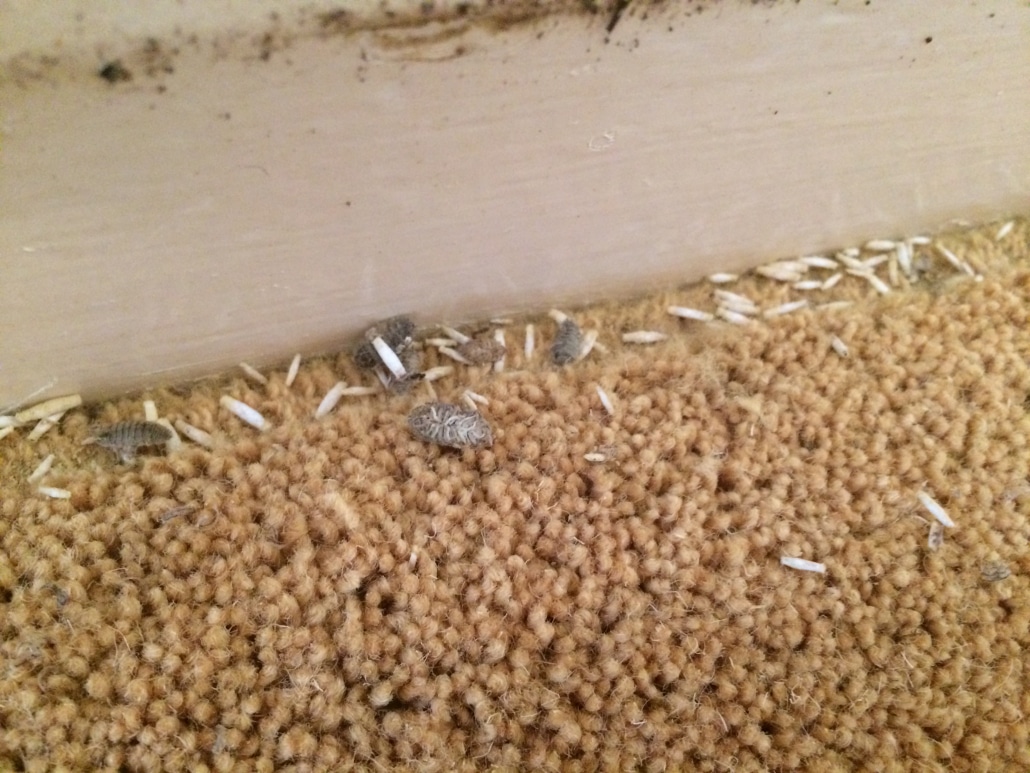
Carpet moth damage often begins in areas that are rarely disturbed. This can include underneath sofas, behind furniture, around skirting boards and in dark corners.
Paul says:
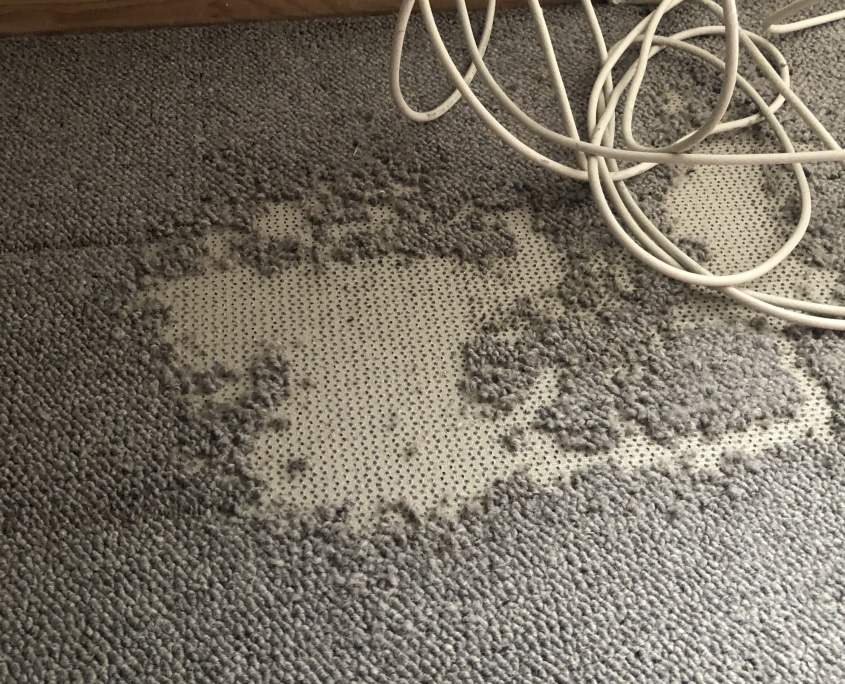
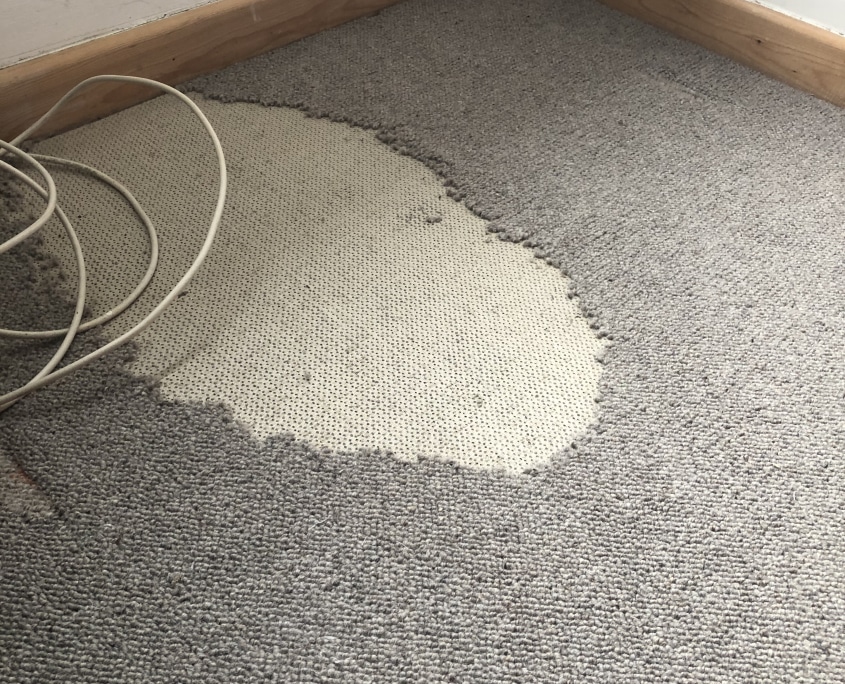
“Typically, people find small holes in the carpet in the corners of rooms or underneath items that are rarely moved. Sometimes just a few tufts are missing, and in the worst cases, we find several square metres of carpet pile have been eaten.”
Other signs may include:
- Small bald patches or loose carpet fibres
- Cream-coloured larvae or tiny, silk-like cases
- Fine webbing near the base of the carpet pile
- Adult moths crawling or flying close to the floor
- Damage beneath heavy furniture, rugs or storage boxes
- Carpet moths favour dark, quiet, undisturbed areas, so visible adult moths may be only part of a much larger problem.
Will vacuuming get rid of carpet moths?
Regular vacuuming is an important part of preventing infestations, but it may not remove an established carpet moth problem.
“The eggs are covered with a glue-like substance that sticks them to the food source, such as the base of the carpet pile, pleats in curtains or the underside of sofas,”
Paul explains.
Standard vacuuming may remove some larvae and debris, but eggs can remain firmly attached deep within carpet fibres and furnishings. Areas beneath furniture, along carpet edges and inside upholstery can also be difficult to reach.
Professional treatment may therefore be required to break the lifecycle and deal with eggs, larvae and adult moths.
How ServiceMaster Clean can help
ServiceMaster Clean offers professional moth remediation alongside its carpet and upholstery cleaning services.
Each property is assessed individually before treatment begins. The team first determines whether the problem is caused by carpet moths, carpet beetles, or another pest. A full risk assessment is then carried out, taking into account the property’s layout, environmental factors, and any respiratory health concerns.
Paul says:
“Each moth job is different. We visit the property, confirm the issue, complete a full risk assessment and provide a clear plan of action and written estimate.”
There are two main service options.
Treat and repair
Where the damage is limited, the team may be able to professionally clean and treat the affected carpet.
This service can include:
- Professional carpet cleaning
- Treatment to target moth eggs, larvae and adult moths
- Specialist retufting or reweaving to repair smaller areas of damage
In some cases, careful repair work can restore small holes without the need to replace the entire carpet.
Carpet removal and treatment
Where an infestation has caused extensive damage, the carpet and underlay may need to be removed.
This service can include:
- Cutting out and removing contaminated carpet and underlay
- Removing staples and nails where appropriate
- Treating the exposed flooring and surrounding areas
- Safely disposing of contaminated materials
ServiceMaster Clean can also work with local carpet retailers. Treatment is usually completed before a new carpet is fitted, helping to reduce the risk of the replacement carpet becoming infested.
What carpet moth treatments are available?
There is no single treatment that suits every home. The right option depends on the severity of the infestation, the materials affected and the household’s needs.
Professional pesticide treatment
Professional pesticide products can be applied to kill eggs, larvae and adult moths. Some products remain effective for a period after application.
Clear safety guidance is provided before treatment. Occupants may need to stay out of treated areas until the product has fully dried. Extra precautions may be required for people with asthma, COPD or other respiratory conditions.
Non-toxic encapsulation treatment
Non-toxic encapsulation products work by immobilising moth eggs, larvae and adult moths present at the time of application.
Paul describes the treatment as working “like the finest microscopic spider’s web”, preventing pests from moving until they expire naturally.
This option does not use toxins and normally requires no exclusion period. However, it leaves no active ingredient behind, so it will only affect pests present when the product is applied.
Trichogramma wasps
Trichogramma wasps are tiny parasitic wasps that target moth eggs. They lay their eggs inside the moth eggs, preventing the moth larvae from developing.
The wasps are supplied in specialist sachets and require a stable indoor temperature, usually between 20°C and 25°C.
Once no moth eggs remain, the wasps can no longer complete their life cycle and naturally die out.
Can you prevent carpet moths from entering your home?
Unfortunately, it is almost impossible to completely prevent moths from entering a property. They can fly through open doors and windows or be carried inside on clothing, shoes, pet fur, second-hand rugs and furniture.
You can, however, make your home less attractive to them.
Paul recommends:
- Vacuum carpets regularly, including edges and underneath furniture
- Move sofas, beds and storage boxes when cleaning
- Vacuum-pack wool clothing and fabrics that are rarely used
- Avoid leaving clothing, paper or clutter on the floor
- Check second-hand rugs and furniture before bringing them indoors
- Arrange regular professional carpet and upholstery cleaning
- Inspect rolled or stored rugs before returning them to living areas
“The unfortunate truth is that you cannot stop moths entering your home,” Paul says. “However, a good maintenance routine combined with regular professional carpet and upholstery cleaning will make your home a place moths will not want to stay.”
Carpet moth facts you may not know
Carpet moth larvae can be difficult to spot. When they feed on strongly coloured carpet fibres, the dye can stain the silk used to create their protective casing, helping them blend into the carpet.
Moth eggs can survive for several weeks, while larvae can persist for months and, in some conditions, much longer. A rug stored in a loft for several years could still become the source of a new infestation when it is brought back into the home.
Carpet beetles can cause similar damage. They are sometimes linked to birds’ nests in the eaves or roof space, where beetle eggs and larvae can enter the property.
Smaller affected items, such as clothing and soft toys, may be placed in a freezer for at least 72 hours to kill moths at every stage of development. Always check the manufacturer’s care instructions first.
Worried about carpet moths?
Early action can help limit the damage and may increase the chance of repairing your carpet rather than replacing it.
ServiceMaster Clean specialists can inspect affected carpets and furnishings, identify the likely cause and recommend the most suitable cleaning, treatment or repair option.