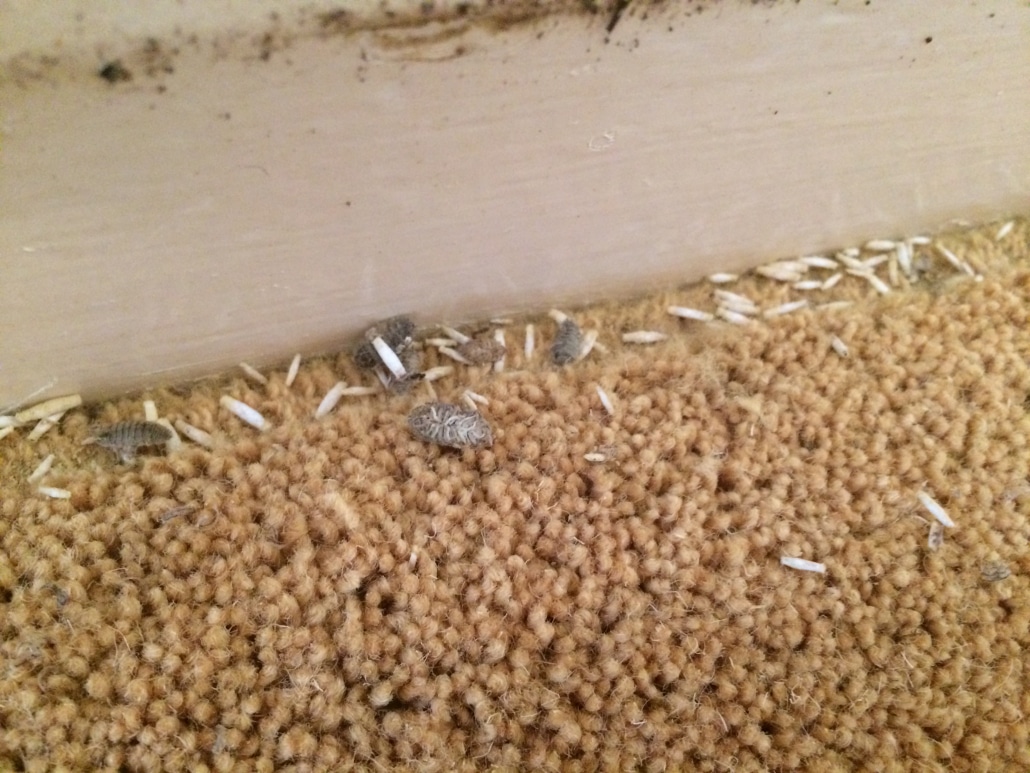
You vacuum regularly, and the centre of the carpet stays clean.

However, dark grey or black lines are appearing along skirting boards, under doors, or near radiators.

These spots may seem like dirt that your vacuum can’t reach. Known as filtration soiling or draught marks, these stains can develop gradually over time, even with regular carpet cleaning.

But what causes these marks, and can you remove them?

What are the dark lines around carpet edges?

Dark lines around carpet edges are typically due to filtration soiling.

This occurs when air flows through small gaps around the carpet, beneath doors, along skirting boards, or through floor gaps.

As air moves through the carpet fibres, the carpet acts as a filter, trapping tiny airborne particles within its fibres. Over time, these particles accumulate enough to form a noticeable dark line.

What causes filtration soiling?

The responsible particles may originate from various common sources inside your home.

These can include:

  • Dust
  • Fine dirt
  • Cooking particles
  • Smoke and soot
  • Airborne pollutants
  • Particles produced by candles or open fires

Since the particles are very fine, they can penetrate deep into the carpet fibers.

That’s why the marks usually develop gradually instead of appearing suddenly.

Where are draught marks most likely to appear?

Filtration soiling often develops wherever air regularly moves through or around carpeting.

You may notice dark lines:

  • Along skirting boards
  • Around doorways
  • Under internal doors
  • Along the edges of stairs
  • Near radiators
  • Around floor vents
  • Where carpet meets another flooring type

Darker patches may appear beneath closed doors due to air regularly flowing through the small gap between the door and the carpet.

Why doesn’t vacuuming remove draught marks?

Vacuuming is essential for maintaining your carpet, but household vacuums often struggle to remove filtration soiling.

The fine particles that cause dark lines around the edges are so small that air movement can draw them deep into the carpet fibres instead of removing them from the surface.

By the time you notice a draught mark, the accumulation could have been forming for months or even years.

Therefore, simply vacuuming repeatedly may not significantly improve its appearance.

Does filtration soiling mean your carpet is dirty?

Not necessarily. Regular vacuuming can still lead to filtration soiling.

The marks relate to airflow and particles common in homes, which explains why they appear in particular spots while nearby carpet stays cleaner.

Nevertheless, visible draught marks show that particles have built up in the carpet fibres.

Can you clean dark lines around carpet edges yourself?

Be cautious when attempting to remove draught marks.

Repeated scrubbing may harm carpet fibres without effectively removing the discolouration-causing particles.

Using excessive household cleaning products can leave residues, and some products may adversely affect the carpet’s colour or fibres, depending on the material.

If you decide to use a carpet cleaning product, make sure it suits your specific carpet and do a patch test in a hidden area first.

For persistent filtration soiling, professional cleaning is usually the best choice.

Can professional carpet cleaning remove filtration soiling?

Professional carpet cleaning can often greatly reduce draught marks, but complete removal isn’t always possible.

The effectiveness of the treatment depends on factors such as:

  • How long the marks have been present
  • The carpet fibre and construction
  • The severity of the build-up
  • What particles have caused the marks
  • Whether previous cleaning products have been used

A professional carpet cleaner can evaluate the carpet and select the right treatment instead of repeatedly using generic stain removers.

Irreversible discolouration can sometimes result from older or heavily soiled filtration.

Can you prevent dark lines from coming back?

Complete prevention of filtration soiling might not always be possible, especially where frequent airflow occurs beneath floors or near room edges.

Nonetheless, consistent carpet upkeep can minimise accumulation.

  • Vacuum regularly, paying special attention to skirting boards and doorways.
  • The crevice tool helps you reach hard-to-access spots missed by the main vacuum head.
  • Additionally, monitor sources of airborne particles in your home and ensure proper ventilation.

Periodic professional cleaning can also eliminate deeper deposits before they become more obvious.

Spotted dark lines around your carpet?

Dark edges on your carpet don’t necessarily indicate neglect; they may just be draught marks from years of air circulation and small particles settling in the fibres.

The key is to address them properly.

If you see dark lines along the edges that won’t go away with regular vacuuming, your local ServiceMaster Clean specialist can examine the carpet and suggest the best treatment.

Find your nearest ServiceMaster Clean specialist to discuss professional carpet cleaning, or book a clean online.
The first wet days of autumn can quickly change what comes into your home.

Mud, moisture, grit, and dirt cling to shoes before being tracked into hallways, stairs, and living rooms.

Even if your carpet appears relatively clean, tiny particles can settle deep within its fibres. Taking a few small steps now can make maintaining your carpets easier throughout autumn and winter.

How can you protect carpets from muddy shoes?

The easiest way to keep carpets clean from muddy shoes is to block dirt at the entrance.

A high-quality doormat captures dirt and moisture from shoes before they touch your carpet.

If space allows, using an outdoor mat followed by an indoor one creates an additional barrier. Urging everyone to remove their shoes at the door can make a significant difference.

Though it seems straightforward, stopping dirt before it reaches your carpet is much simpler than cleaning it up afterwards.

Pay extra attention to entrance areas

Hallways and entrances tend to see the most foot traffic in your home. In autumn, they are also the first spots to get wet shoes, muddy boots, damp coats, and other outdoor items.

Vacuum these areas frequently instead of waiting until the carpet looks visibly dirty.

Grit and fine soil can settle deep between carpet fibres, and walking over these particles repeatedly can accelerate wear over time.

What should you do when muddy footprints appear?

If mud gets on your carpet, avoid scrubbing right away.

Wet mud tends to spread and can make a small stain worse. Instead, let it dry when possible and then gently vacuum up the loosened soil.

If a stain persists, consult your carpet’s care instructions before using any cleaning products or call ServiceMaster Clean to help.

Always test stain removers on a hidden small area first. Because different carpet fibres react differently to cleaning solutions, what works for one may not suit another.

Could stain protection help?

If your carpet frequently encounters children, pets, visitors, or muddy shoes, considering professional stain protection could be beneficial.

This treatment forms an extra barrier around the carpet fibres, giving you more time to address spills and stains before they set.

While it doesn’t make your carpet completely stain-proof and regular cleaning remains necessary, it can simplify daily upkeep and help shield your carpet from common accidents typical of a busy household.

Why clean your carpets before the wet weather?

While it might seem sensible to wait until winter before scheduling a professional carpet cleaning, there’s a strong reason to clean sooner.

Your carpet likely already has dust, pollen, pet hair, and fine dirt gathered during spring and summer.

When you add autumn mud and moisture, the build-up becomes even more substantial.

Getting your carpet professionally cleaned before the wetter months can eliminate this dirt and provide a fresher, cleaner surface as autumn begins.

Can professional carpet cleaning remove muddy marks?

Professional cleaning can effectively remove or reduce many common carpet stains, such as mud and tracked-in dirt.

Results depend on:

  • The carpet fibre
  • The type of stain
  • Previous treatments
  • How long the stain has been present

That’s why proper stain treatment is important.

Using the wrong products or scrubbing too much can harm fibres or complicate stain removal.

ServiceMaster Clean experts evaluate your carpet first to choose the best cleaning approach.

Don’t forget your stairs

Autumn foot traffic also impacts areas beyond hallways. Carpeted stairs endure continuous use daily.

Dirt tracked into the hallway can easily spread upstairs via feet, socks, and paws. Regular vacuuming helps eliminate loose debris.

Focus on the edges and front of each step, where dirt and wear tend to accumulate. For heavily used spots, professional cleaning can provide a deeper clean when regular vacuuming isn’t sufficient.

Get your carpets ready for autumn

You cannot keep every bit of autumn mud outside, especially in a busy home.

You can make it harder for dirt to get into your carpets in the first place.

  • Use good entrance mats
  • Remove shoes at the door
  • Vacuum high-traffic areas regularly
  • Deal with stains correctly
  • Consider professional stain protection
  • Book professional cleaning when deeper dirt starts to build up

If you want to protect carpets from muddy shoes and get them ready for the wetter months ahead, your local ServiceMaster Clean specialist can help.

Find your nearest ServiceMaster Clean specialist to discuss professional carpet cleaning and stain protection, or book a clean online.

After a summer filled with weekends away, extended holidays, and many miles travelled, your caravan probably deserves some attention.

It may seem fairly clean at first glance, but consider everything that has gone through it during the summer—sandy shoes, muddy paws, food spills, grass, dust, and maybe a few rainy days when everyone was indoors.

Before closing the door on another summer, it’s wise to give the interior a thorough check. Our end of caravan season cleaning checklist highlights some key areas to address before your camper is used less often or stored away.

1. Start with a thorough vacuum

Begin by clearing as much as possible from the floors and seating areas.

Vacuum carpets thoroughly, paying special attention to edges, beneath furniture, and into corners, as these spots can accumulate a surprising amount of grit, crumbs, and dust over a busy summer.

Use appropriate vacuum attachments for upholstered seats, and clean between cushions where crumbs and debris often hide.

If your rugs are removable and care instructions permit, take them outside and vacuum both sides.

2. Check carpets for stains

After cleaning any loose dirt, examine your caravan carpets carefully.

Have you overlooked any stains? Spills from food and drinks, muddy shoes, and pet accidents are easy to forget when you’re having fun.

Leaving these stains uncleaned for months can make them harder to remove later. Avoid scrubbing stains aggressively, as this can spread the stain or damage the carpet fibres.

If you’re unsure of the stain’s cause or the right cleaning method, consult a professional carpet cleaner to avoid potential damage.

3. Give the upholstery some attention

Caravan seating gets used a lot during summer. It’s where you have breakfast, unwind after outings, hide from afternoon rain, and sometimes even nap.

As a result, the upholstery can accumulate body oils, dust, food crumbs, pet hair, and smells.

Vacuum the seats thoroughly and look for stains. Focus especially on armrests, cushions, and the most-used spots.

Professional upholstery cleaning can effectively remove embedded dirt and revitalise the fabric after a busy season.

4. Don’t forget the curtains

Curtains often go unnoticed.

While they might not appear dirty, they can accumulate dust, pollen, and odours over time, especially when caravan windows are frequently opened.

Always review the care instructions before washing or cleaning caravan curtains yourself, as certain fabrics need specialised treatment and could shrink or get damaged if cleaned improperly.

For a thorough clean without risking fabric damage, professional curtain cleaning can be very beneficial.

5. Clean your hard flooring properly

Caravan hard floors take a beating during summer.

Sand, grit, grass, and mud are tracked inside, while food and drink spills pose additional challenges.

Start by vacuuming or sweeping to pick up loose debris. Grit can scratch certain flooring if it’s dragged during mopping.

Next, clean the floor with a product appropriate for its type, avoiding excessive water. Too much moisture can seep into joins and edges, potentially causing damage.

6. Check the areas you rarely see

Safely move items aside and inspect beneath seating, around furniture edges, and in corners.

These quieter spots often gather dust and debris since they are seldom cleaned during a quick holiday tidy-up. You may be surprised by what has built up since summer began.

7. Make sure everything is completely dry

This step is important.

Avoid closing your caravan until carpets, upholstery, and flooring are fully dry.

Trapped moisture inside an enclosed caravan can cause musty odours and promote mould growth.

Ensure good ventilation and verify that all cleaned items are thoroughly dry before closing windows and storing the caravan.

Should you professionally clean your caravan at the end of summer?

If your caravan has experienced a busy season, professional cleaning might be worthwhile.

While regular vacuuming and spot cleaning maintain cleanliness, professional services can eliminate dirt and residues embedded deeper in carpets and upholstery.

This is especially beneficial if you have pets, stubborn stains, persistent odours, or an interior that no longer feels as fresh as it did at the beginning of summer.

Start next caravan season with a fresher interior

Cleaning your caravan at the end of the season means less dirt, dust, and staining sitting there for months.

It also makes that first trip next year a little nicer. Instead of opening the door and immediately thinking about cleaning, you can start getting ready for your next break.

Work through your end of caravan season cleaning checklist now, and give the carpets, upholstery, curtains and flooring the attention they have earned after a busy summer.

For professional caravan carpet and upholstery cleaning in your area, contact your nearest ServiceMaster Clean.

Washable rugs are increasingly popular for busy households, as their convenience allows for easy cleaning in a washing machine, ideal for families with children, pets, or accidental spills.

However, washable rugs don’t always eliminate the need for professional cleaning.

The best approach depends on the rug’s material, construction, the type of stains or dirt, and, most crucially, the manufacturer’s cleaning advice.

What is a washable rug?

A washable rug is meant for home cleaning, typically using a domestic washing machine.

Some feature a removable top layer, while others can be washed whole. They are practical for kitchens, children’s rooms, hallways, and other high-traffic areas.

However, “washable” does not mean all rugs can go directly into the washing machine; it’s important to follow the manufacturer’s care instructions for temperature, detergents, spin speeds, and drying methods.

What is professional rug cleaning?

Professional rug cleaning begins with an assessment of the specific rug.

A specialist evaluates its fibres, construction, condition, colours, and level of dirt before determining the appropriate cleaning method.

Cleaning may be done on-site, or the rug may be taken for specialised cleaning, especially if it can’t be machine washed, is delicate, heavily soiled, or high-value.

Washable rugs vs professional rug cleaning: which cleans deeper?

This is where the difference can be significant.

Machine washing can work well for the routine cleaning of rugs specifically designed for it. It can remove everyday dirt and help deal with smaller spills.

Professional rug cleaning is intended to tackle dirt and residue that have settled deeper into the fibres.

That can include:

  • Dust and fine grit
  • Pet hair and residues
  • Food and drink spills
  • Pollen and allergens
  • Everyday odours
  • Embedded dirt in high-traffic areas

If a rug still looks dull or smells less than fresh after regular home cleaning, it may need more than another trip through the washing machine.

Can all rugs be washed at home?

Short answer: no.

This is a key distinction when comparing washable rugs to professional cleaning.

Wool, Oriental, Persian, handwoven, antique, and other speciality rugs often need more delicate handling.

Improper washing or drying can cause fibres to shrink, colours to bleed, or the rug’s construction to be damaged. Just because a rug fits in your washing machine doesn’t mean it should go there.

Always check the care label first. If in doubt, consult a professional before attempting to clean it.

What about stains?

A washable rug makes it easy to handle everyday spills at home.

Stubborn stains are different.

Red wine, coffee, grease, pet accidents and older stains can penetrate further into the rug. Repeatedly washing the entire rug may not necessarily remove the problem.

Using the wrong product or temperature can also make some stains harder to treat.

Professional cleaners can assess the stain alongside the rug fibre before choosing an appropriate treatment.

Remember that no cleaning method can guarantee the removal of every stain. Permanent dye or fibre damage cannot always be reversed.

What about pet smells and other odours?

If an odour is near the surface, washing might be effective.

However, if it has penetrated deeper into the fibres or backing, the situation becomes more complex. This is especially true with pet accidents, where the visible stain may vanish while the odour persists.

In such cases, professional cleaning offers a more comprehensive solution, ensuring that embedded smells are thoroughly addressed.

Is professional cleaning only for expensive rugs?

A rug doesn’t have to be antique or highly valuable to justify professional cleaning. Often, it’s just a rug you love and want to preserve.

Large rugs can be particularly challenging to clean at home, as they become heavy when wet and require thorough drying. Failing to dry them properly can lead to issues like unpleasant odours.

Professional cleaning offers an alternative when home washing is impractical or no longer effective.

So, are washable rugs worth it?

For many households, yes.

Washable rugs can make routine maintenance much easier, especially in busy areas of the home. If the manufacturer says the rug is machine-washable, following those instructions can be a useful part of its care.

But washable and professionally cleaned are not really competing ideas.

One offers everyday convenience. The other provides specialist care when a rug needs a deeper clean, stain treatment or a cleaning method suited to its particular fibres and construction.

When should you professionally clean your rug?

Consider professional rug cleaning if:

  • Your rug cannot be machine washed.
  • Stains keep returning.
  • It has persistent pet or household odours.
  • The colours have started to look dull.
  • It is heavily soiled.
  • You own a wool, Persian, Oriental, handwoven or delicate rug.
  • You’re unsure how to clean it.
  • You washed it at home, but it still doesn’t feel properly clean.

Need help deciding how to clean your rug?

The best cleaning method is the one that suits your rug.

Your local ServiceMaster Clean specialist can assess your rug and recommend an appropriate cleaning method based on its material, construction and condition.

With locally owned ServiceMaster Clean businesses across the UK, specialists understand that different rugs need different care.

If your rug needs more than routine cleaning at home, contact your nearest ServiceMaster Clean or book a professional clean online today.

Alternatively, you can book your rug cleaning online.

What’s better: professional carpet cleaning vs DIY cleaning machines?

Hiring a carpet cleaning machine can seem like an easy solution.

You notice your carpets looking a little tired, spot a few stains, and decide it is time for a refresh. A quick trip to hire a machine feels like the convenient option.

For light maintenance, DIY carpet-cleaning machines can help. However, there are important differences between hiring a machine and booking a professional carpet clean.

Understanding those differences helps you choose the right option for your home and your carpets. Read on to find out the differences between professional carpet cleaning vs DIY cleaning machines.

How do DIY carpet cleaning machines work?

Most DIY carpet cleaning machines use water, cleaning solution, and suction to remove dirt from carpets.

They are designed for home use, making them accessible and easy to operate. For surface-level dirt or a quick refresh, they can improve the appearance of carpets. However, they do have limitations.

Carpets are made from different fibres, have different levels of wear, and respond differently to moisture and cleaning products. A single approach does not always suit every carpet.

Professional equipment provides a deeper clean

One of the biggest differences between professional carpet cleaning and DIY cleaning is the equipment.

Professional machines are designed to remove dirt, allergens, and residue from deeper within carpet fibres.

Over time, carpets collect:

  • Dust
  • Pet hair
  • Pollen
  • Food particles
  • Everyday dirt and debris

Vacuuming and basic cleaning help with the surface, but they cannot always reach what has settled deeper down.

Professional carpet cleaning targets this hidden build-up.

Moisture control matters

One common issue with DIY carpet cleaning is overusing water. It is easy to assume that more water means a better clean.

Unfortunately, over-wetting carpets can cause problems. If too much moisture remains, carpets take longer to dry and can develop unpleasant odours.

In some cases, excess moisture can affect the carpet backing.

Professional carpet cleaners understand how much water each carpet needs and use equipment designed to remove moisture effectively.

Stain removal requires the right approach

Not all stains are the same.

Coffee, wine, mud, grease, and pet accidents all behave differently. The carpet fibre also changes how a stain should be treated.

  • Using the wrong product or technique can sometimes make a stain harder to remove.
  • Scrubbing can spread the mark.
  • Incorrect products can leave residue or even damage fibres.

Professional cleaners assess the stain and carpet type before choosing the most suitable treatment.

DIY cleaning can leave residue behind

A carpet may look clean immediately after being cleaned with a DIY machine.

The problem is what gets left behind.

If cleaning solution is not fully removed, residue can remain within the fibres. This residue can attract new dirt, causing carpets to look dirty again sooner than expected.

Professional cleaning focuses on removing both the dirt and the cleaning solution used during the process.

Different carpets need different care

Every carpet is different. While two carpets may look similar, the fibres, materials, and construction can completely change how they should be cleaned.

  • A wool carpet should not always be treated the same way as a synthetic carpet.
  • Luxury carpets, delicate fibres, and older carpets often require specialist knowledge.

Professional cleaners identify the carpet type and choose the safest cleaning method. This helps protect the appearance, texture, and lifespan of the carpet.

Which option is right for you?

DIY carpet cleaning machines can be useful for light cleaning and short-term maintenance.

Professional carpet cleaning is usually the better choice when:

  • Your carpets have not been cleaned for a long time
  • You have stubborn stains
  • There are lingering odours
  • You have pets or children
  • Your carpet needs a deeper clean
  • You want to protect your carpet long term

Essentially, both professional carpet cleaning and DIY cleaning machines have their place. It depends on the result you want.

Protect your carpets with professional carpet cleaning

Your carpets are used every single day.

They handle footsteps, spills, pets, visitors, and everything life brings into your home.

While DIY machines can provide a temporary refresh, professional carpet cleaning offers a deeper, safer, and longer-lasting result.

If your carpets are ready for a proper clean, contact your nearest ServiceMaster Clean or book online today.

Vacuuming your carpets is probably part of your normal cleaning routine. It keeps your home looking tidy, removes surface dirt, and helps maintain your carpets week after week.

But even with regular vacuuming, carpets collect much more than you can see. Dust, allergens, pet hair, oils, and everyday dirt gradually settle deeper into the fibres. Over time, this can affect how your carpets look, feel, and even how fresh your home seems.

So, how often should you professionally clean your carpets?

The answer depends on your home.

How often should carpets be professionally cleaned?

As a general guide, most carpets should be professionally cleaned every 12 months.

However, every household is different.

A quiet home with minimal foot traffic will have very different needs compared to a busy family home with children, pets, and visitors.

Here is a simple guide:

  • Standard household use: every 12 months
  • Homes with children: every 6 to 12 months
  • Homes with pets: every 6 months
  • High-traffic areas: more frequently if needed

The more your carpets experience, the more care they need.

Why vacuuming alone is not enough

Vacuuming is important. It removes loose dirt, dust, and debris from the surface.

However, it cannot remove everything.

Tiny particles work their way deep into carpet fibres. Every time you walk across the carpet, these particles can move further down. Over time, this can cause carpets to look dull, feel flat, and wear faster.

Professional carpet cleaning removes the deeper build-up that household cleaning cannot always reach.

Homes with children may need more frequent cleaning

Family homes are busy.

Food crumbs, drink spills, muddy shoes, craft materials, and everyday accidents are all part of normal life.

Even when stains are cleaned quickly, small amounts of residue can remain within the carpet.

Professional cleaning helps remove this build-up and keeps carpets feeling fresher for longer.

How often should pet owners clean their carpets?

Pets bring a lot of joy into a home. They also bring a little extra cleaning.

Pet hair, outdoor dirt, pollen, and natural oils from fur can become trapped within carpet fibres.

You may notice certain areas wear faster too, especially favourite sleeping spots or routes through the home.

For homes with pets, professional carpet cleaning every 6 months is often recommended.

Do certain rooms need cleaning more often?

Not every carpet in your home experiences the same level of use.

Some areas naturally work harder.

  • Hallways collect dirt from shoes.
  • Living rooms see constant movement.
  • Stairs experience repeated foot traffic in the same places.
  • Bedrooms often require less frequent cleaning because they are used less frequently.

A professional cleaner can recommend the best schedule for your home rather than treating every room the same.

Does professional cleaning extend carpet life?

Yes, regular professional cleaning can help protect your carpets.

Dirt and grit trapped inside fibres act like an abrasive. Over time, movement across the carpet causes these particles to damage the fibres.

Removing this build-up helps maintain the carpet’s appearance, texture, and condition.

Properly caring for your carpets can help delay the need for replacement.

When should you book a carpet clean sooner?

Sometimes your carpets need attention before your usual schedule.

Consider professional carpet cleaning if:

  • Your carpet no longer feels fresh after vacuuming
  • Stains keep returning
  • Rooms have lingering odours
  • Colours look dull
  • High-traffic areas look flattened
  • You cannot remember the last time they were professionally cleaned

These are usually signs that dirt has settled deeper into the carpet.

Professional carpet cleaning for your home

There is no one-size-fits-all rule for every home.

How often you have your carpets professionally cleaned depends on your lifestyle, who lives there, and how they are used daily.

Regular professional cleaning helps remove hidden dirt, refresh your home, and protect your carpets for years to come. If you are unsure whether your carpets need cleaning, your local ServiceMaster Clean specialist can help.

Contact your nearest ServiceMaster Clean or book online today.

There is nothing quite like coming home after a holiday. You don’t want to leave, but you also look forward to getting home!

Your own bed. Your favourite chair. A familiar routine.

At the same time, returning home can help you notice things you hadn’t seen before leaving. Dust on the shelves, a carpet that appears a bit flat, or a sofa that no longer feels as fresh as it used to.

Even if your home was spotless before you went away, a few simple jobs can help it feel welcoming again.

Open the windows

Start by letting fresh air circulate in your home. Even a clean house can feel a bit stale after being closed up for a week or two.

Opening windows helps replace stagnant air, making rooms feel fresher almost instantly.

If the weather permits, keep the windows open as you continue with your cleaning routine.

Vacuum your carpets and rugs

Dust accumulates even when no one is home.

Before unpacking, thoroughly vacuum your carpets and rugs, especially in entrances, hallways, and living areas where dust tends to gather.

If you have pets, you might also find some hair that has settled while you were away.

Regular vacuuming is an easy way to make your entire home feel cleaner.

Refresh your upholstery

Even if your sofa and chairs haven’t been used while you were away, upholstery still gathers dust from the air.

Shake out the cushions, vacuum the fabric with the right attachment, and clean any leather furniture with suitable products.

If your upholstery was already due for a professional cleaning before your holiday, coming home is a great reminder to schedule one.

Give hard floors some attention

Hard floors tend to reveal dust quickly, especially in dry summer conditions.

Start by sweeping or vacuuming to pick up loose dirt, then mop with an appropriate cleaner for your flooring type.

Whether your floors are luxury vinyl, laminate, tile, or stone, selecting the right cleaning product helps preserve their finish and enhance their appearance.

Wash away holiday dust

Dust settles surprisingly fast in an empty home.

Use a microfiber cloth to wipe surfaces, skirting boards, shelves, and window sills before putting everything back.

This small step makes your home feel significantly fresher.

Check for stains you had forgotten about

Sometimes, marks that were present before your holiday become more noticeable upon your return.

You might notice a coffee stain on the carpet, a mark on the dining chair, or a spill on the rug that hasn’t fully cleaned up.

Instead of postponing their cleaning, now is a good time to tackle them. New stains are typically easier to clean, but even older marks can often be improved with professional cleaning.

Think beyond the visible dirt

A home can appear tidy while still harbouring dust, allergens, body oils, and odours deep in carpets and upholstery.

Professional cleaning eliminates this concealed buildup, making your home not only look cleaner but also feel fresher.

Additionally, it helps preserve carpets, rugs, upholstery, and hard floors from unnecessary wear, ensuring they remain in good condition longer.

Start the next season with a fresh home

Returning from holiday often feels like a fresh start.

Giving your home a proper refresh helps extend that feeling for a little longer. Clean carpets, fresh upholstery, spotless rugs, and well-maintained hard floors all make a noticeable difference to how your home looks and feels.

If your home needs more than a quick tidy after your holiday, professional cleaning can help restore the freshness that everyday cleaning cannot always achieve.

Find your nearest ServiceMaster Clean or book online today.

A bright, sunny room is unmatched. Natural light enhances your home, making it feel larger, warmer, and more welcoming.

However, while sunshine is great for your living space, it is not always kind to your furniture.

Over time, sunlight can alter the look and condition of your upholstery. These changes are usually so slow that many homeowners don’t notice them until the damage has occurred.

The good news is that there are simple ways to protect your furniture and keep it looking its best for longer.

Sunlight causes colours to fade

The most significant effect sunlight has on upholstery is fading.

Ultraviolet (UV) rays gradually degrade the dyes in fabrics, causing colours to fade and appear washed out.

You may notice that one arm of the sofa looks lighter than the other, or that the cushions closest to the window no longer match the rest of the furniture.

Dark colours usually fade faster, although lighter fabrics are also susceptible.

Heat can weaken upholstery fibres

The issues are not solely caused by sunlight.

Extended exposure to heat can slowly dry out upholstery fibres, making fabrics less soft and flexible over time.

Natural materials like cotton and wool are especially vulnerable, though some synthetic fabrics may also become more fragile after prolonged sun exposure.

Although these changes occur gradually, they can shorten the overall lifespan of your furniture.

Summer highlights what winter hides

Bright sunshine has an additional effect: it enhances visibility.

Dust, flattened fibres, light stains, and worn spots are far easier to see when sunlight shines through your windows.

Many assume their upholstery has suddenly become dirty, but in reality, the sunlight is simply exposing the gradual buildup over time.

Open windows bring more than fresh air

During summer, many people keep windows and patio doors open all day.

This helps make homes more comfortable but also lets in pollen, dust, and airborne particles.

Upholstery serves as a filter, trapping these particles in the fabric.

Additionally, the increased use of furniture during summer holidays can cause sofas and chairs to appear worn out more rapidly than anticipated.

Small changes can protect your furniture

You don’t have to keep your curtains closed all summer. A few simple habits can reduce the effects of sunlight.

Rotate cushions regularly to ensure even wear, and move decorative cushions now and then to prevent permanent colour changes.

During the hottest parts of the day, close blinds or curtains if furniture is in direct sunlight. If feasible, shift smaller furniture away from windows every few months.

These minor adjustments can lead to noticeable improvements over time.

Professional upholstery cleaning helps maintain your furniture

Although professional cleaning cannot reverse sun fading, it can rejuvenate your upholstery’s appearance.

Dust, body oils, allergens, and everyday dirt accumulate inside the fibres. Clearing this build-up enhances the brightness and softness of the fabrics.

Additionally, professional cleaning helps maintain the upholstery’s condition, extending its lifespan.

Regular maintenance is one of the easiest methods to safeguard your furniture investment.

Looking after your upholstery all year round

Sunlight helps make a home welcoming, but it can also affect your furniture.

To preserve your upholstery’s appearance, comfort, and durability, protect it from prolonged exposure to sunlight and have it professionally cleaned.

If your sofa or favourite chair appears worn out, expert upholstery cleaning can revitalise it.

Find your local ServiceMaster Clean or book a cleaning online today.

Carpet moths may be small, but the damage they cause can be significant. From a few missing tufts in a room’s corner to several square metres of damaged carpet, an untreated infestation can quickly become costly.

ServiceMaster Clean has understood this problem for almost a century. ServiceMaster began in 1929 as a moth-proofing company, treating carpets, curtains and furnishings. Today, our local specialists continue to help homeowners deal with carpet moths alongside professional carpet and upholstery cleaning.

We spoke to Paul Carpenter, an experienced carpet and upholstery cleaning specialist at ServiceMaster Clean Brighton and Lewes, to explain what homeowners should look out for and what can be done about it.

Which moths damage carpets?

The two main carpet moth species found in UK homes are the common clothes moth, Tineola bisselliella, and the case-bearing clothes moth, Tinea pellionella.

Whilst the adult moth can eat your carpet, 90% of damage is caused at the larval stage.

Paul explains:

“The larvae have a voracious appetite for all things organic, including carpets, sofas, curtains and even each other.”

Larvae consume natural fibers and organic materials as they grow into adult moths. Once mature, the adult moths mate and lay eggs, perpetuating the cycle.

Wool carpets and rugs are particularly attractive to moth larvae because they contain keratin, a natural protein that serves as a food source. However, larvae can also survive on dust, hair, pet fur and food debris trapped within other flooring and soft furnishings.

How do you know if you have carpet moths?

Carpet moth damage often begins in areas that are rarely disturbed. This can include underneath sofas, behind furniture, around skirting boards and in dark corners.

Paul says:

“Typically, people find small holes in the carpet in the corners of rooms or underneath items that are rarely moved. Sometimes just a few tufts are missing, and in the worst cases, we find several square metres of carpet pile have been eaten.”

Other signs may include:

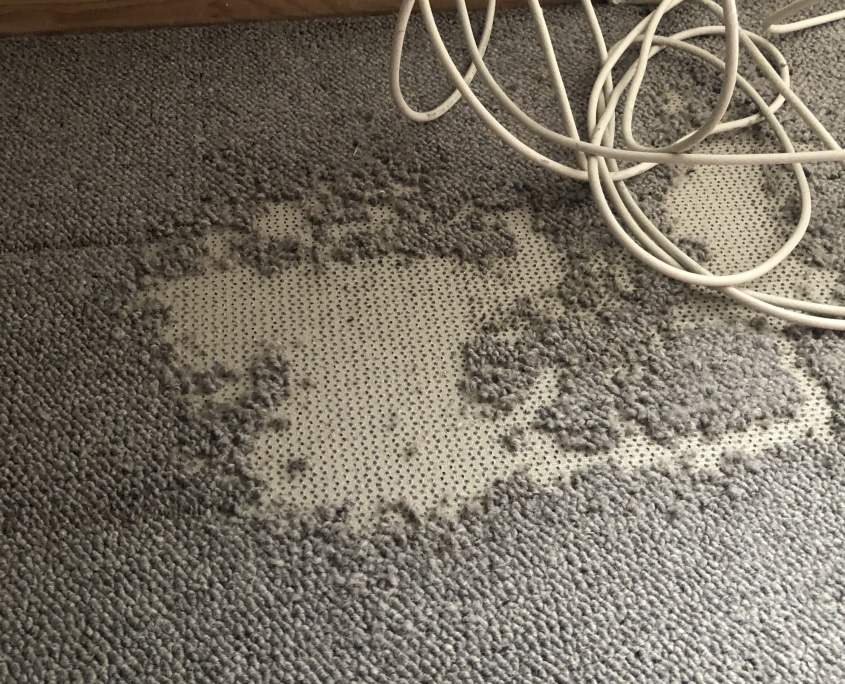
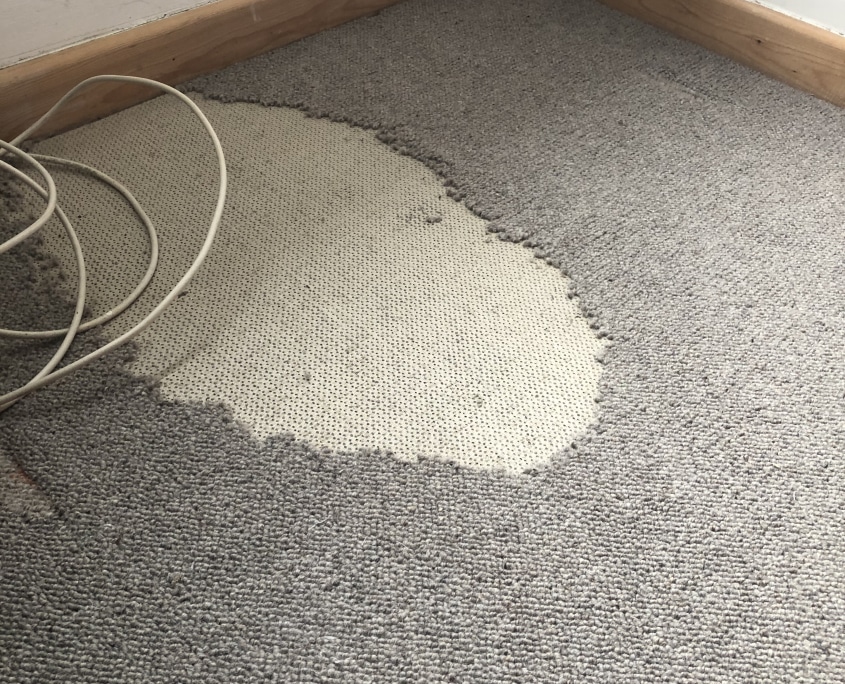
  • Small bald patches or loose carpet fibres
  • Cream-coloured larvae or tiny, silk-like cases
  • Fine webbing near the base of the carpet pile
  • Adult moths crawling or flying close to the floor
  • Damage beneath heavy furniture, rugs or storage boxes
  • Carpet moths favour dark, quiet, undisturbed areas, so visible adult moths may be only part of a much larger problem.

Carpet moth damage to carpet

Major carpet moth damage

Will vacuuming get rid of carpet moths?

Regular vacuuming is an important part of preventing infestations, but it may not remove an established carpet moth problem.

“The eggs are covered with a glue-like substance that sticks them to the food source, such as the base of the carpet pile, pleats in curtains or the underside of sofas,”

Paul explains.

Standard vacuuming may remove some larvae and debris, but eggs can remain firmly attached deep within carpet fibres and furnishings. Areas beneath furniture, along carpet edges and inside upholstery can also be difficult to reach.

Professional treatment may therefore be required to break the lifecycle and deal with eggs, larvae and adult moths.

How ServiceMaster Clean can help

ServiceMaster Clean offers professional moth remediation alongside its carpet and upholstery cleaning services.

Each property is assessed individually before treatment begins. The team first determines whether the problem is caused by carpet moths, carpet beetles, or another pest. A full risk assessment is then carried out, taking into account the property’s layout, environmental factors, and any respiratory health concerns.

Paul says:

“Each moth job is different. We visit the property, confirm the issue, complete a full risk assessment and provide a clear plan of action and written estimate.”

There are two main service options.

Treat and repair

Where the damage is limited, the team may be able to professionally clean and treat the affected carpet.

This service can include:

  • Professional carpet cleaning
  • Treatment to target moth eggs, larvae and adult moths
  • Specialist retufting or reweaving to repair smaller areas of damage

In some cases, careful repair work can restore small holes without the need to replace the entire carpet.

Carpet removal and treatment

Where an infestation has caused extensive damage, the carpet and underlay may need to be removed.

This service can include:

  • Cutting out and removing contaminated carpet and underlay
  • Removing staples and nails where appropriate
  • Treating the exposed flooring and surrounding areas
  • Safely disposing of contaminated materials

ServiceMaster Clean can also work with local carpet retailers. Treatment is usually completed before a new carpet is fitted, helping to reduce the risk of the replacement carpet becoming infested.

What carpet moth treatments are available?

There is no single treatment that suits every home. The right option depends on the severity of the infestation, the materials affected and the household’s needs.

Professional pesticide treatment

Professional pesticide products can be applied to kill eggs, larvae and adult moths. Some products remain effective for a period after application.

Clear safety guidance is provided before treatment. Occupants may need to stay out of treated areas until the product has fully dried. Extra precautions may be required for people with asthma, COPD or other respiratory conditions.

Non-toxic encapsulation treatment

Non-toxic encapsulation products work by immobilising moth eggs, larvae and adult moths present at the time of application.

Paul describes the treatment as working “like the finest microscopic spider’s web”, preventing pests from moving until they expire naturally.

This option does not use toxins and normally requires no exclusion period. However, it leaves no active ingredient behind, so it will only affect pests present when the product is applied.

Trichogramma wasps

Trichogramma wasps are tiny parasitic wasps that target moth eggs. They lay their eggs inside the moth eggs, preventing the moth larvae from developing.

The wasps are supplied in specialist sachets and require a stable indoor temperature, usually between 20°C and 25°C.

Once no moth eggs remain, the wasps can no longer complete their life cycle and naturally die out.

Can you prevent carpet moths from entering your home?

Unfortunately, it is almost impossible to completely prevent moths from entering a property. They can fly through open doors and windows or be carried inside on clothing, shoes, pet fur, second-hand rugs and furniture.

You can, however, make your home less attractive to them.

Paul recommends:

  • Vacuum carpets regularly, including edges and underneath furniture
  • Move sofas, beds and storage boxes when cleaning
  • Vacuum-pack wool clothing and fabrics that are rarely used
  • Avoid leaving clothing, paper or clutter on the floor
  • Check second-hand rugs and furniture before bringing them indoors
  • Arrange regular professional carpet and upholstery cleaning
  • Inspect rolled or stored rugs before returning them to living areas

“The unfortunate truth is that you cannot stop moths entering your home,” Paul says. “However, a good maintenance routine combined with regular professional carpet and upholstery cleaning will make your home a place moths will not want to stay.”

Carpet moth facts you may not know

Carpet moth larvae can be difficult to spot. When they feed on strongly coloured carpet fibres, the dye can stain the silk used to create their protective casing, helping them blend into the carpet.

Moth eggs can survive for several weeks, while larvae can persist for months and, in some conditions, much longer. A rug stored in a loft for several years could still become the source of a new infestation when it is brought back into the home.

Carpet beetles can cause similar damage. They are sometimes linked to birds’ nests in the eaves or roof space, where beetle eggs and larvae can enter the property.

Smaller affected items, such as clothing and soft toys, may be placed in a freezer for at least 72 hours to kill moths at every stage of development. Always check the manufacturer’s care instructions first.

Carpet moth infestation

Worried about carpet moths?

Early action can help limit the damage and may increase the chance of repairing your carpet rather than replacing it.

ServiceMaster Clean specialists can inspect affected carpets and furnishings, identify the likely cause and recommend the most suitable cleaning, treatment or repair option.

Contact your local ServiceMaster Clean specialist to arrange an assessment and get professional advice about carpet moth treatment.